

Why Your FNP Exam Study Strategy Matters
Preparing for the Family Nurse Practitioner (FNP) certification exam involves more than reviewing everything you learned in your program. You need to recall important information, recognize clinical patterns, and apply what you know to patient care scenarios.
That can make it difficult to know where to focus your study time, especially when there’s so much material to cover.
The good news is that effective studying doesn’t necessarily mean spending more hours with your notes. Three strategies can help you make better use of the time you have: active recall, spaced repetition, and clinical application.
In this two-minute video, FNP educator Dr. Karen Myrick explains how to put these strategies to work.
1. Use Active Recall to Test What You Know
It’s easy to spend an hour rereading a chapter and feel like you’ve accomplished something. The material looks familiar, and you recognize the terminology. But recognizing information on a page isn’t the same as being able to recall it when you need it.
That’s where active recall comes in.
Rather than repeatedly reviewing the same material, challenge yourself to retrieve information from memory before checking your notes.
For example, after reviewing diabetes management, close your book and ask yourself:
- What factors influence the selection of an initial treatment?
- Which findings would change my management approach?
- What patient education or follow-up considerations should I remember?
Try answering without looking anything up. Then return to your study materials to identify what you missed.
You can also explain a condition or treatment approach out loud, as though you’re discussing it with a colleague.
This type of retrieval practice is supported by learning research and can improve long-term retention compared with relying on rereading alone.
Try this: At the end of each study session, spend five minutes recalling the most important concepts without your notes. Pay particular attention to what you struggle to remember. Those gaps can help determine what to review next.
2. Used Spaced Repetition Instead of Cramming
When you’re juggling work, family, and exam preparation, it’s tempting to dedicate an entire evening to one subject and then move on.
The problem is that information can fade when you don’t revisit it.
Spaced repetition means returning to material over multiple study sessions rather than concentrating all your review into one sitting.
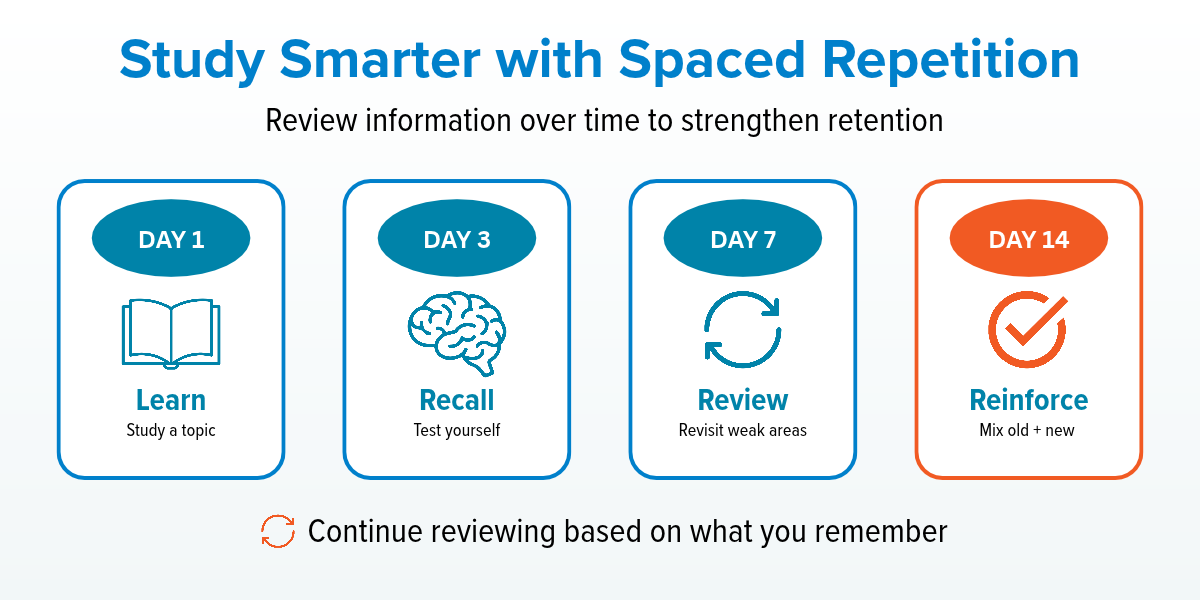
Suppose you’re reviewing hypertension. Instead of spending three hours on the topic and setting it aside, you might:
- Day 1: Review key concepts, treatment considerations, and common clinical presentations.
- Day 3: Test yourself on the material without looking at your notes.
- Day 7: Answer a few related practice questions and review anything you missed.
The intervals don’t have to follow an exact formula. What matters is revisiting information over time and adjusting your review based on how well you remember it.
This approach is especially useful for FNP candidates because preparation involves a broad range of subjects, including adult and pediatric care, pharmacology, health promotion, and clinical management.
Try this: Keep a short list of topics you need to revisit. When you miss a practice question, schedule that concept for another review session instead of simply reading the rationale and moving on.
3. Study Clinical Patterns, Not Just Isolated Facts
Knowing the symptoms of a condition is important. So is knowing its treatment. But FNP certification questions may require you to connect several pieces of information to determine the most appropriate clinical decision.
That means you should practice thinking through patient presentations, not just memorizing lists.
Consider a patient presenting with asthma symptoms.
You might know the available medications, but can you explain how symptom frequency, current treatment, and other clinical findings influence the next step in management?
That’s the difference between recalling a fact and applying your knowledge.
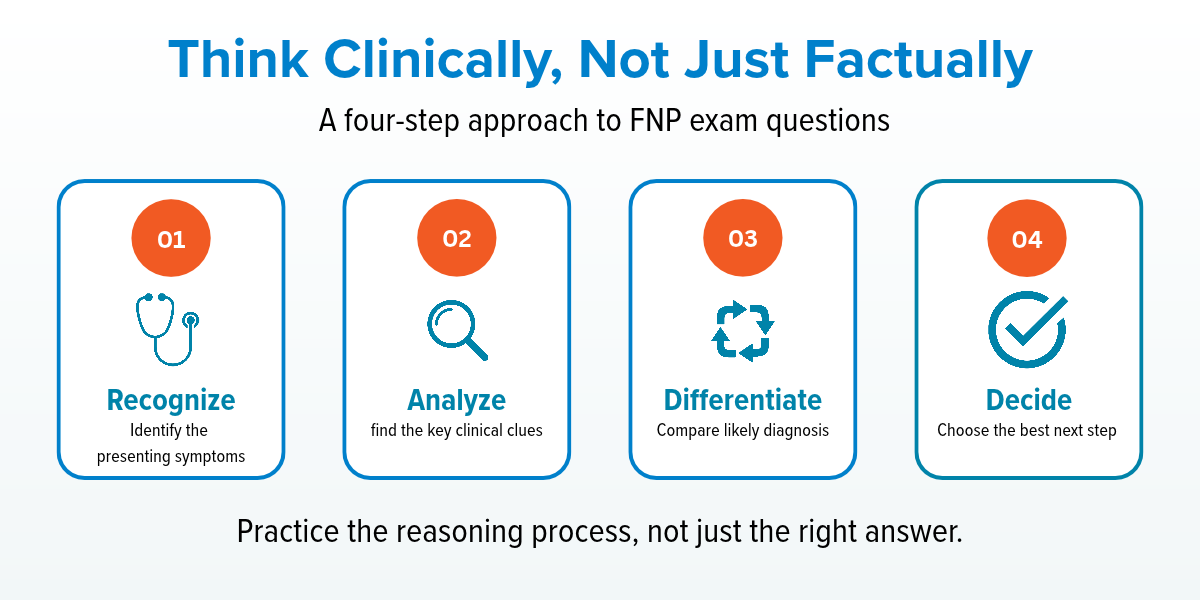
As you review common primary care conditions, ask yourself:
- What findings help distinguish this condition from similar presentations?
- Which symptoms or findings are red flags?
- What additional information would influence my decision?
- What is the most appropriate next step based on the clinical scenario?
Case-based practice questions are particularly helpful here. Don’t stop once you’ve identified the correct answer. Review the rationale and make sure you understand why that option is appropriate and why the alternatives are less suitable.
Try this: Choose one common primary care condition and work through several different patient scenarios. Pay attention to how changes in age, symptoms, history, or examination findings affect your reasoning.
Be sure to use the current exam content outline for your chosen certification, whether ANCC or AANPCB, to guide which topics deserve attention.
How to Put All Three Strategies Together
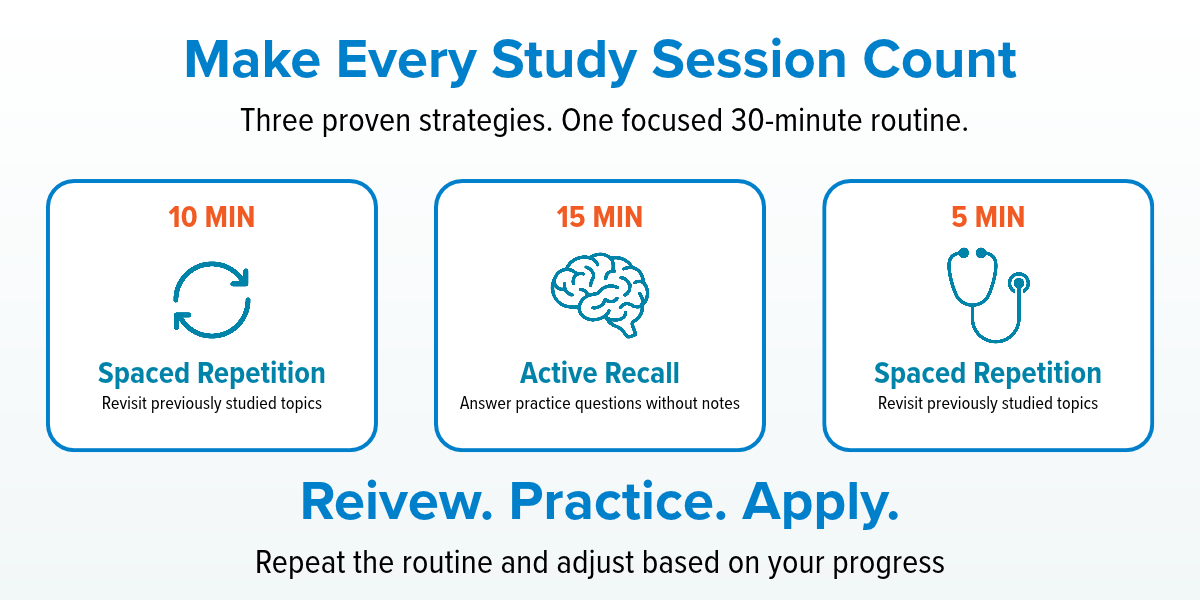
You don’t need three separate study plans to use these techniques. They can work together in a single session.
Here’s one way to structure 30 minutes of FNP exam preparation:
Preparing for certification can feel overwhelming, particularly when you’re trying to balance studying with everything else in your life.
You don’t have to master every topic in one sitting. Start by identifying what you know, finding the areas that need more attention, and returning to those concepts through regular review and clinical practice.
The Maria Leik FNP Certification Intensive Review offers structured review content and exam-style practice to help candidates organize their preparation and work through important clinical concepts.
[Explore the FNP Certification Intensive Review →]
And if you’re looking for a place to begin today, choose one topic from your current study plan. Test yourself on what you remember, review what you missed, and apply it to a clinical scenario.
That’s a productive study session, whether you have 30 minutes or an entire afternoon.

- NP Week 2026: Free On-Demand Webinars for Nurse Practitioners - October 27, 2026
- How to Study for the FNP Exam: 3 Strategies That Actually Work - October 26, 2026
- Webinar Recording: Review of the 2026 ASWB Exam Content - May 21, 2026